
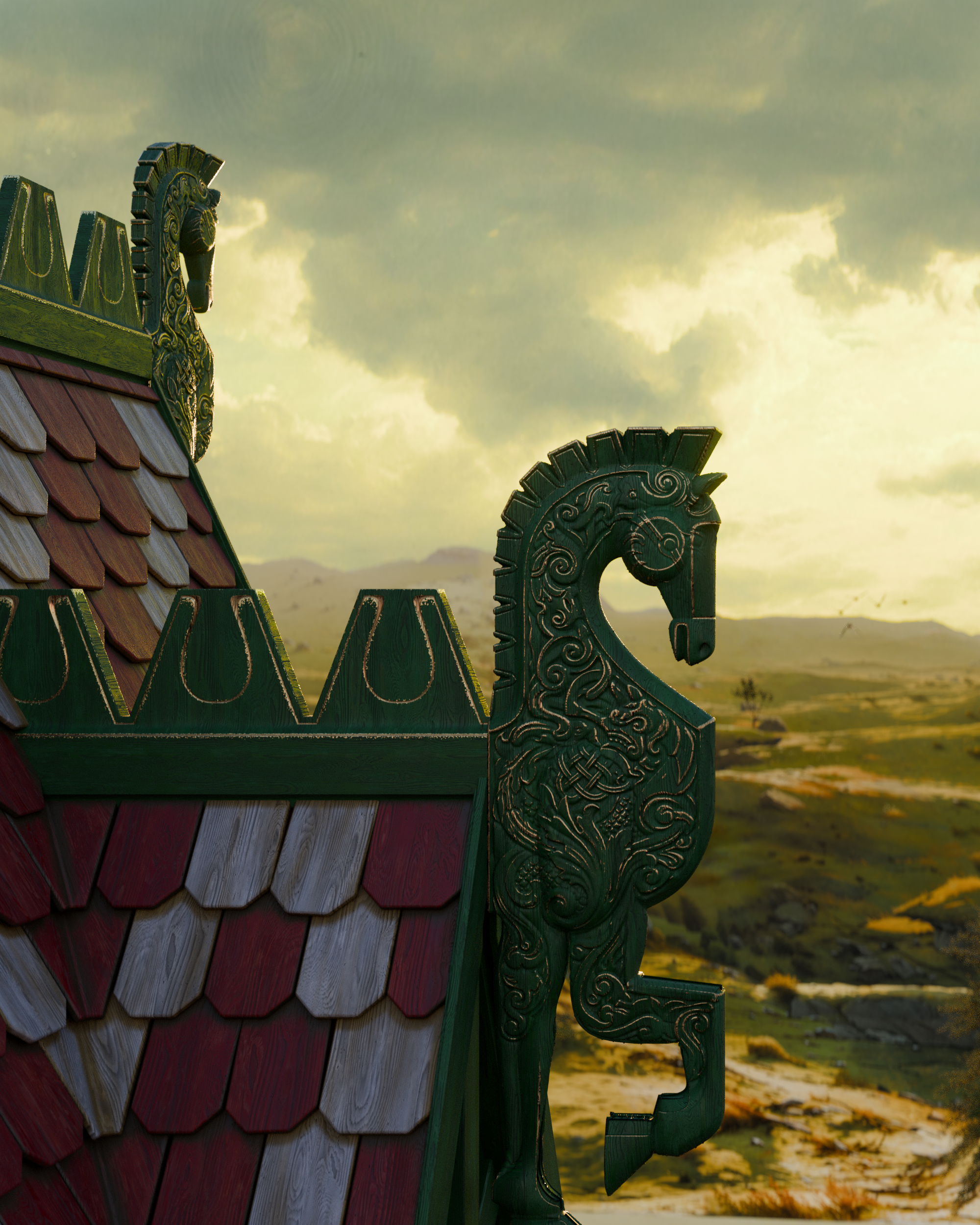
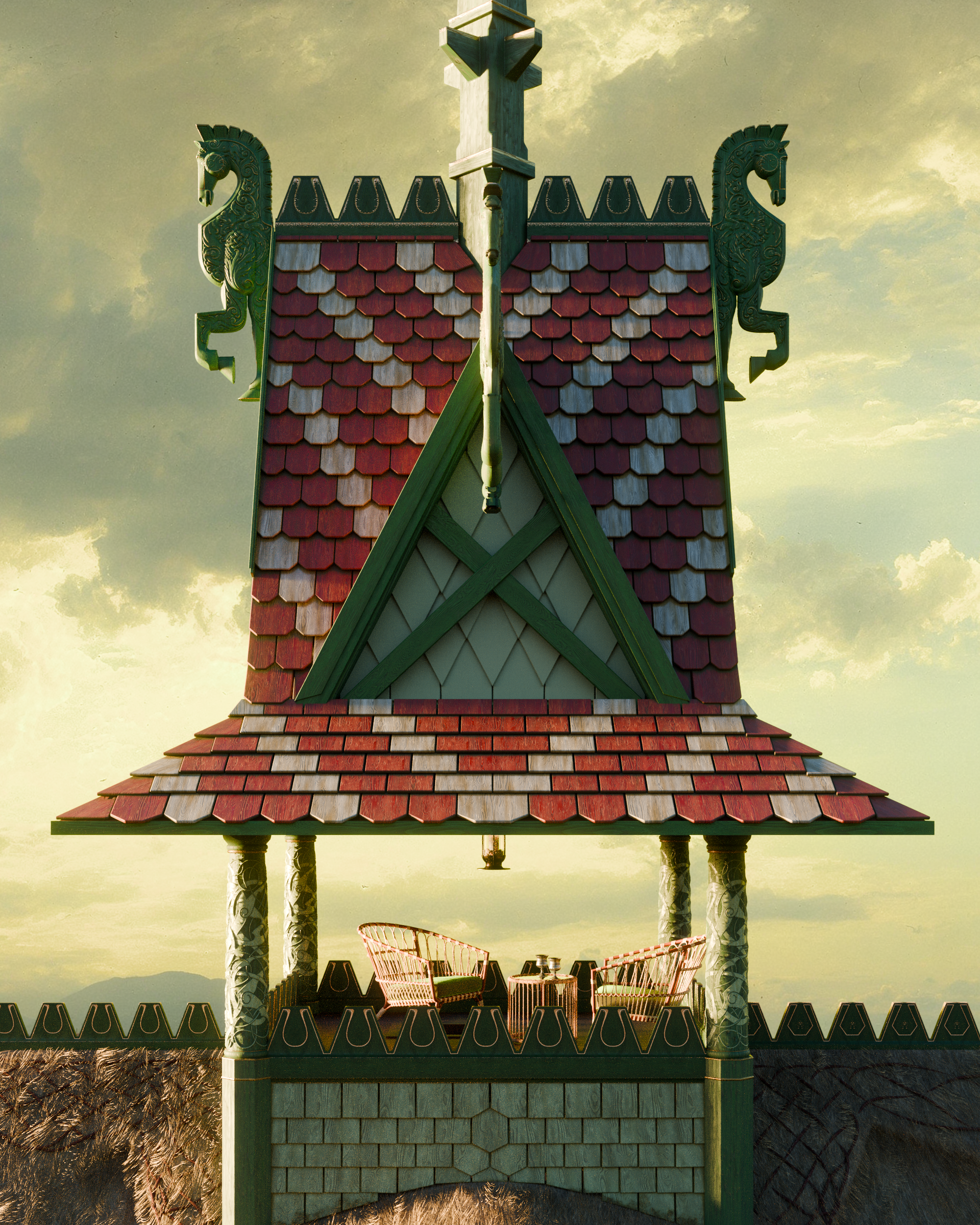
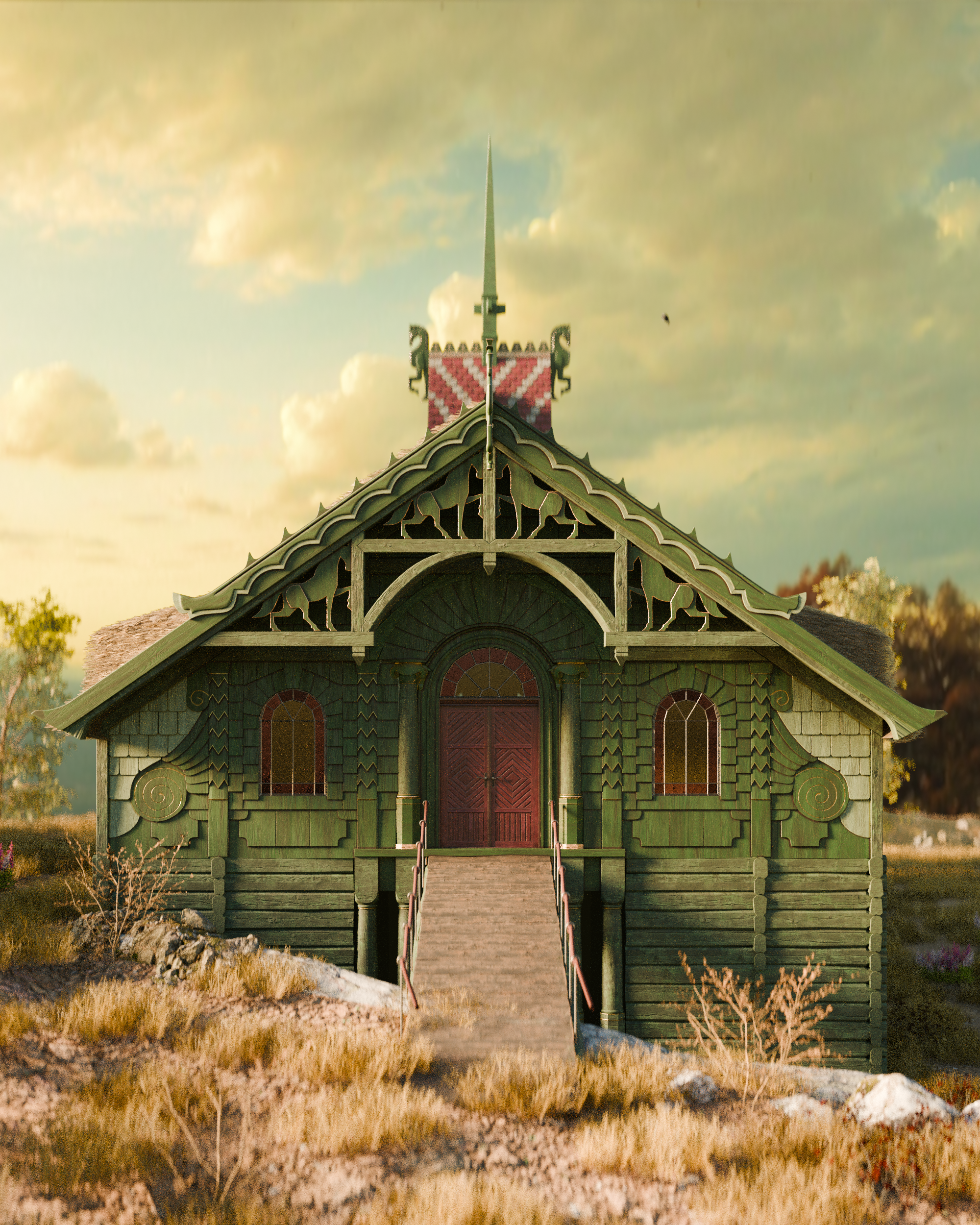
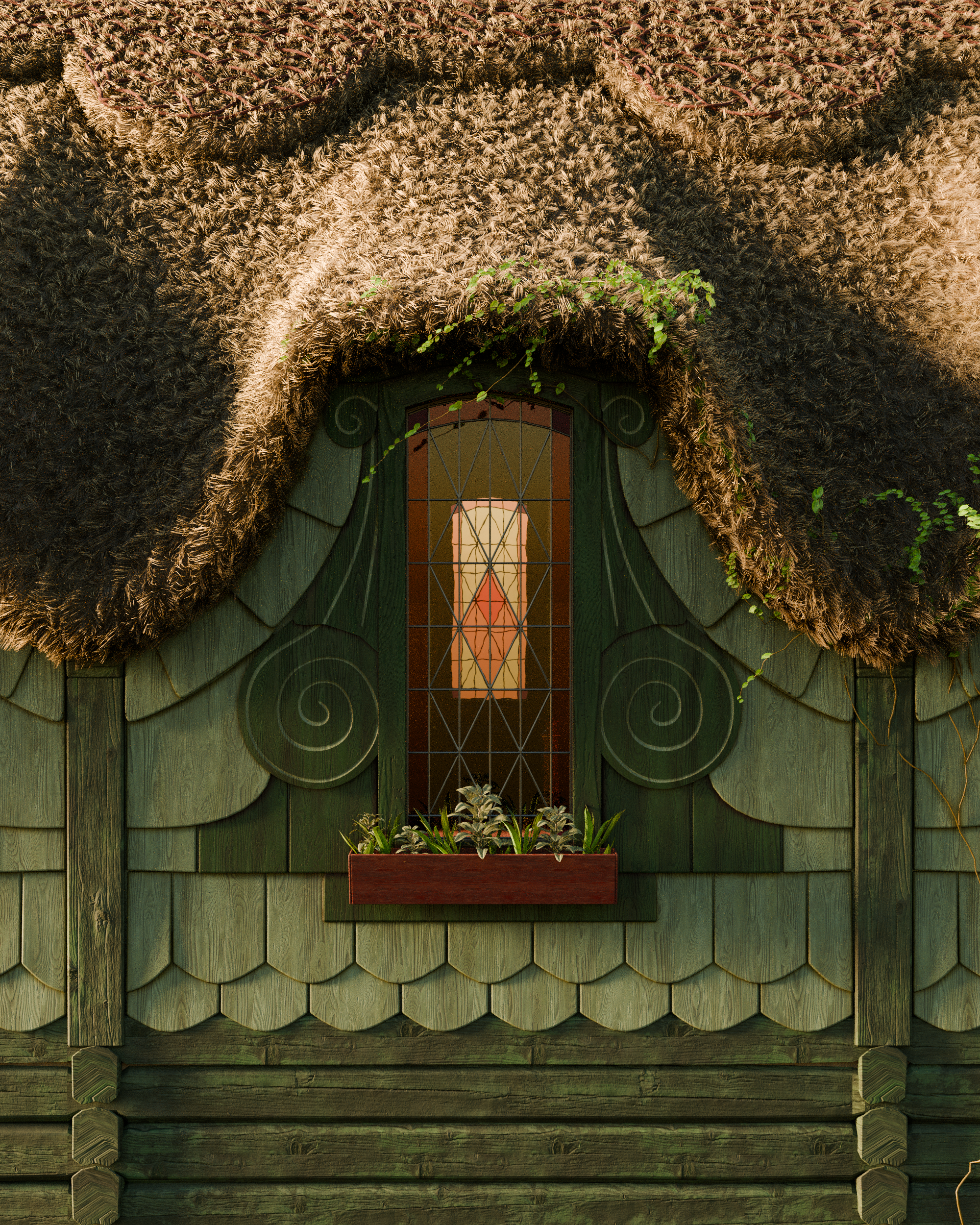
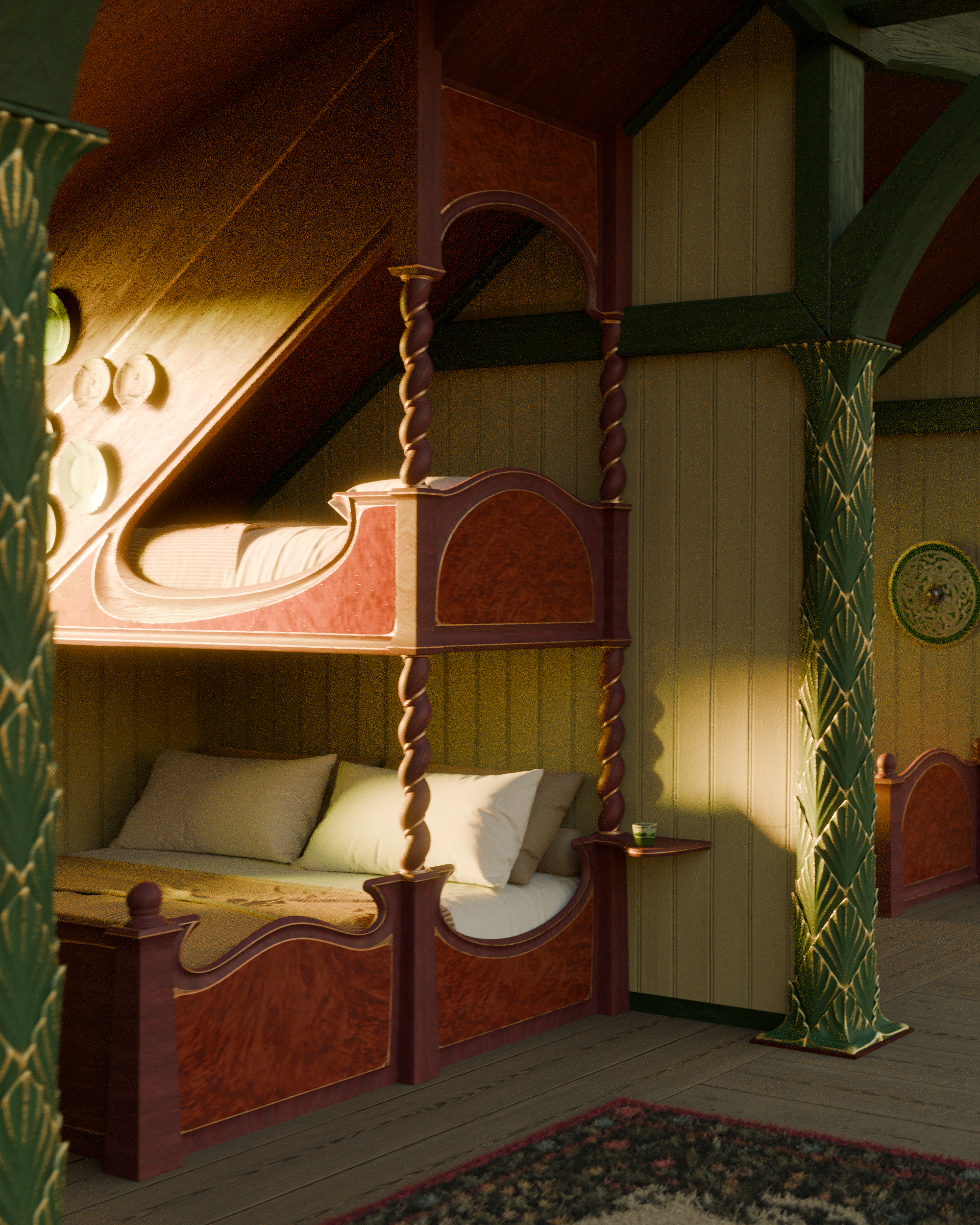
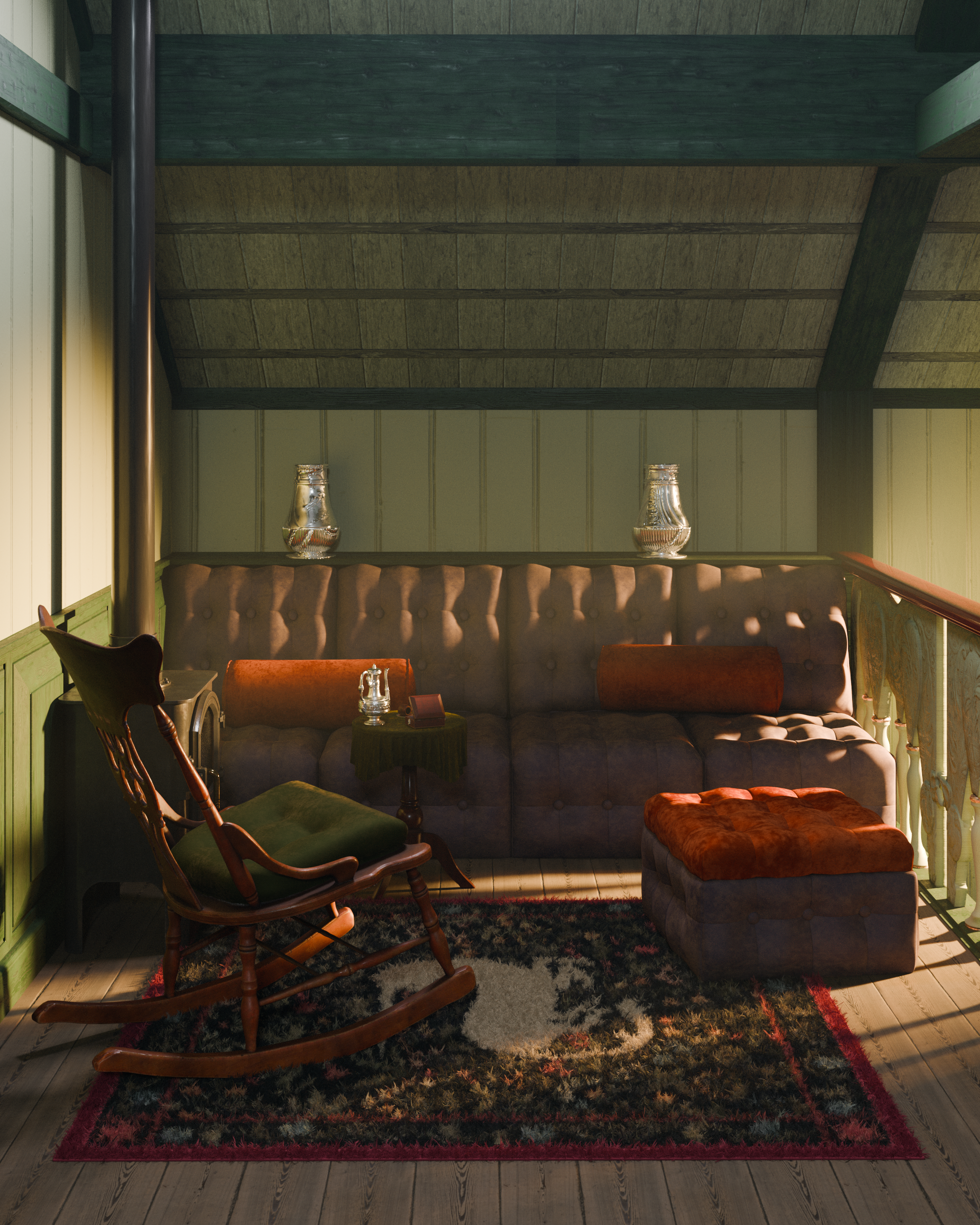
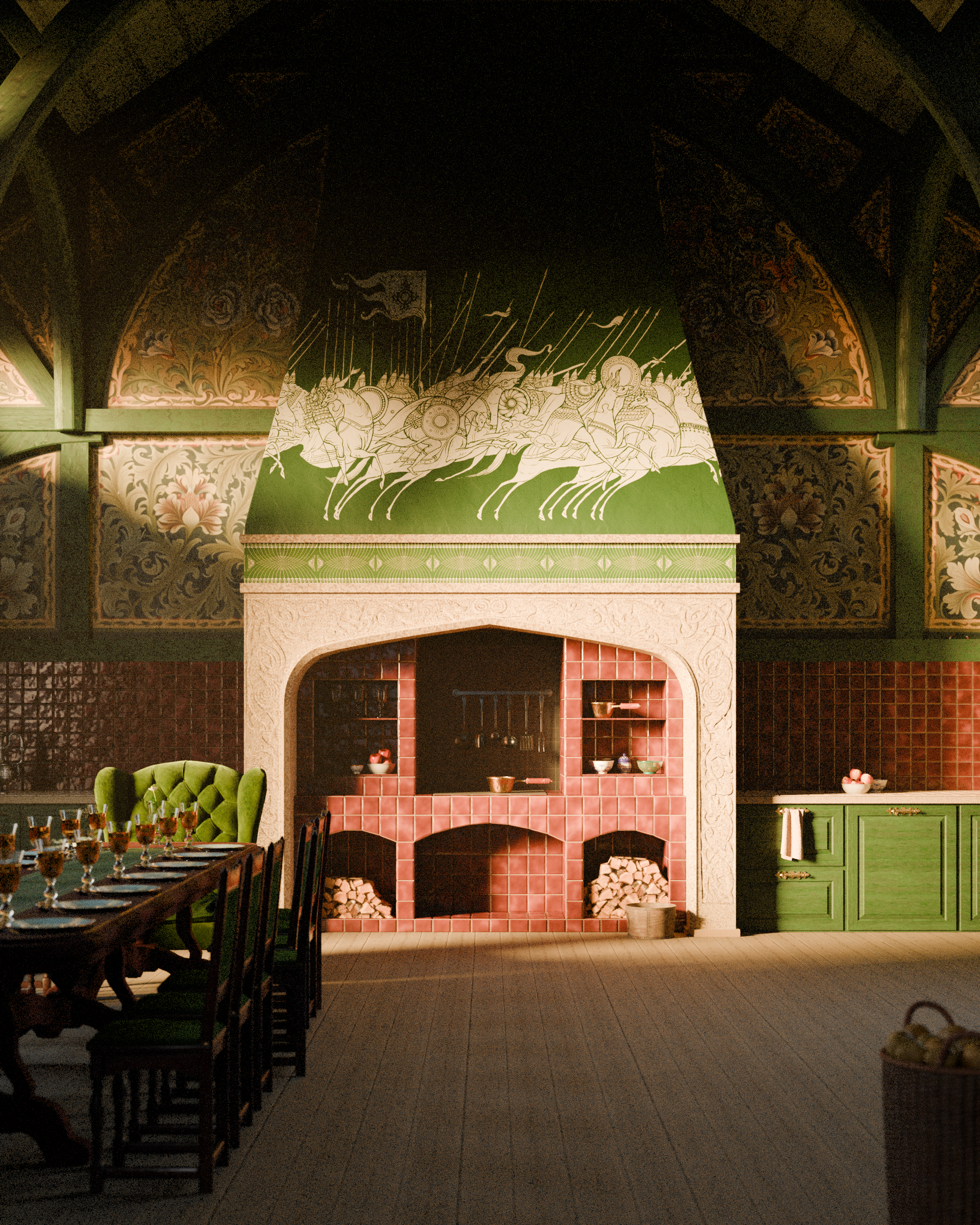
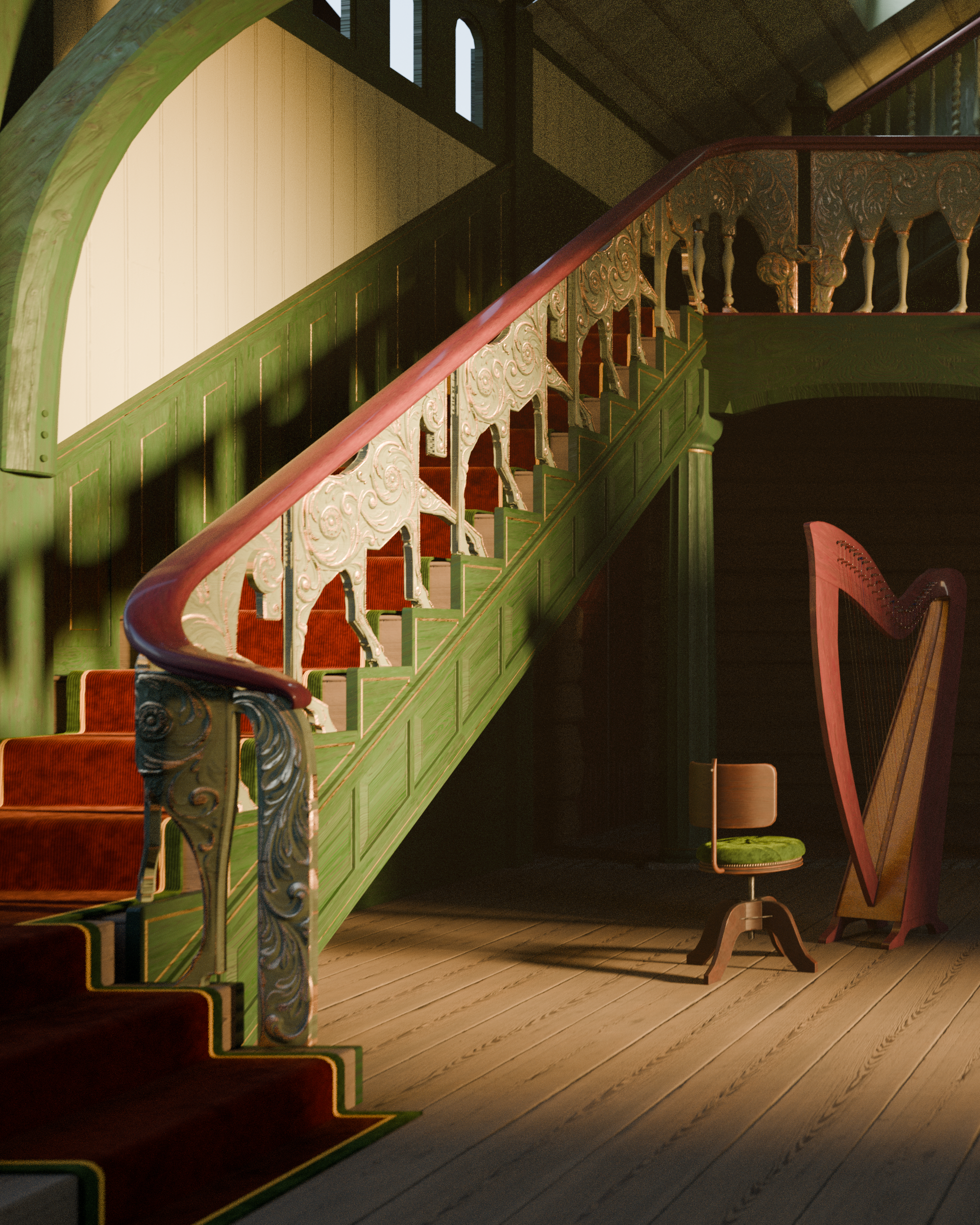
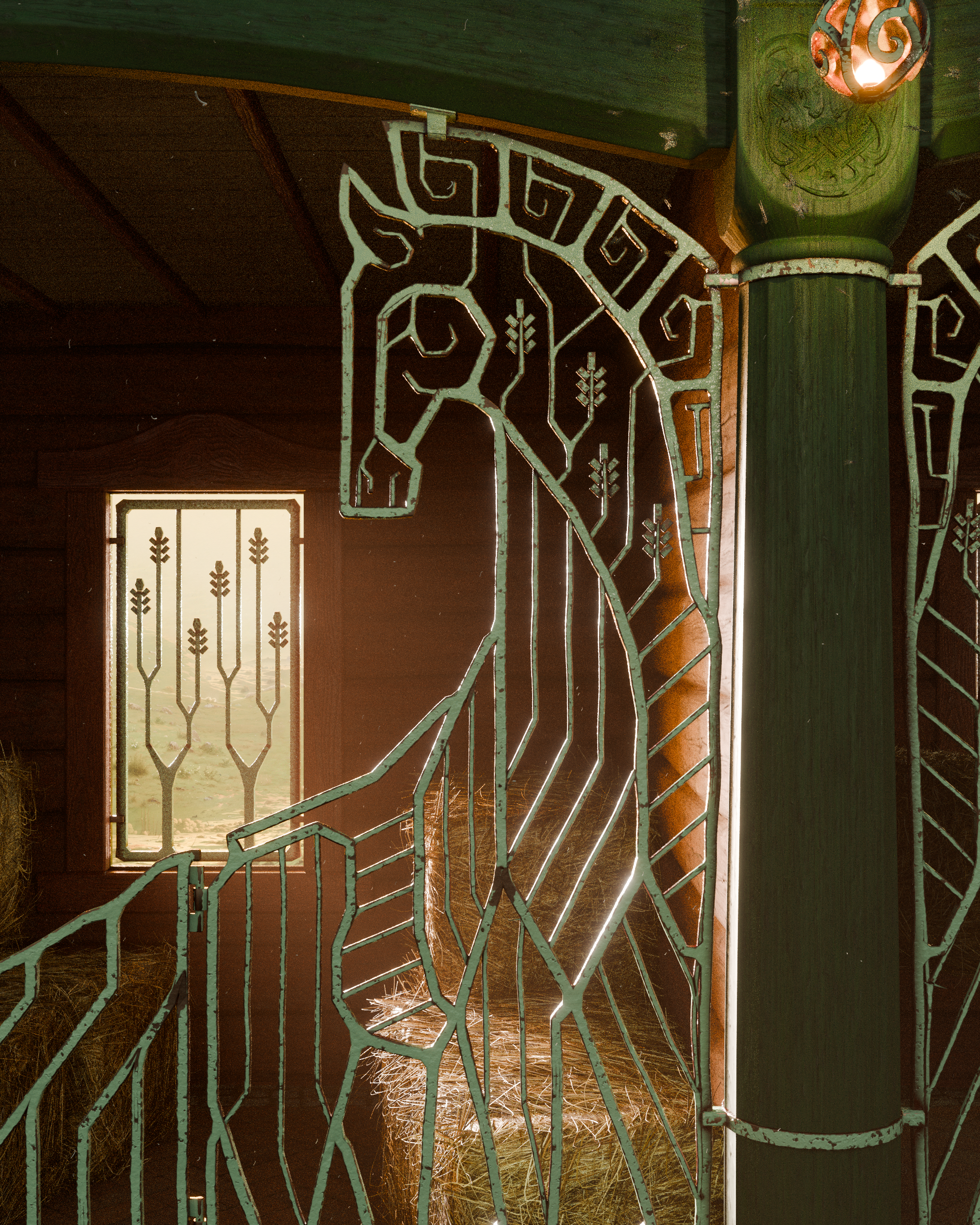
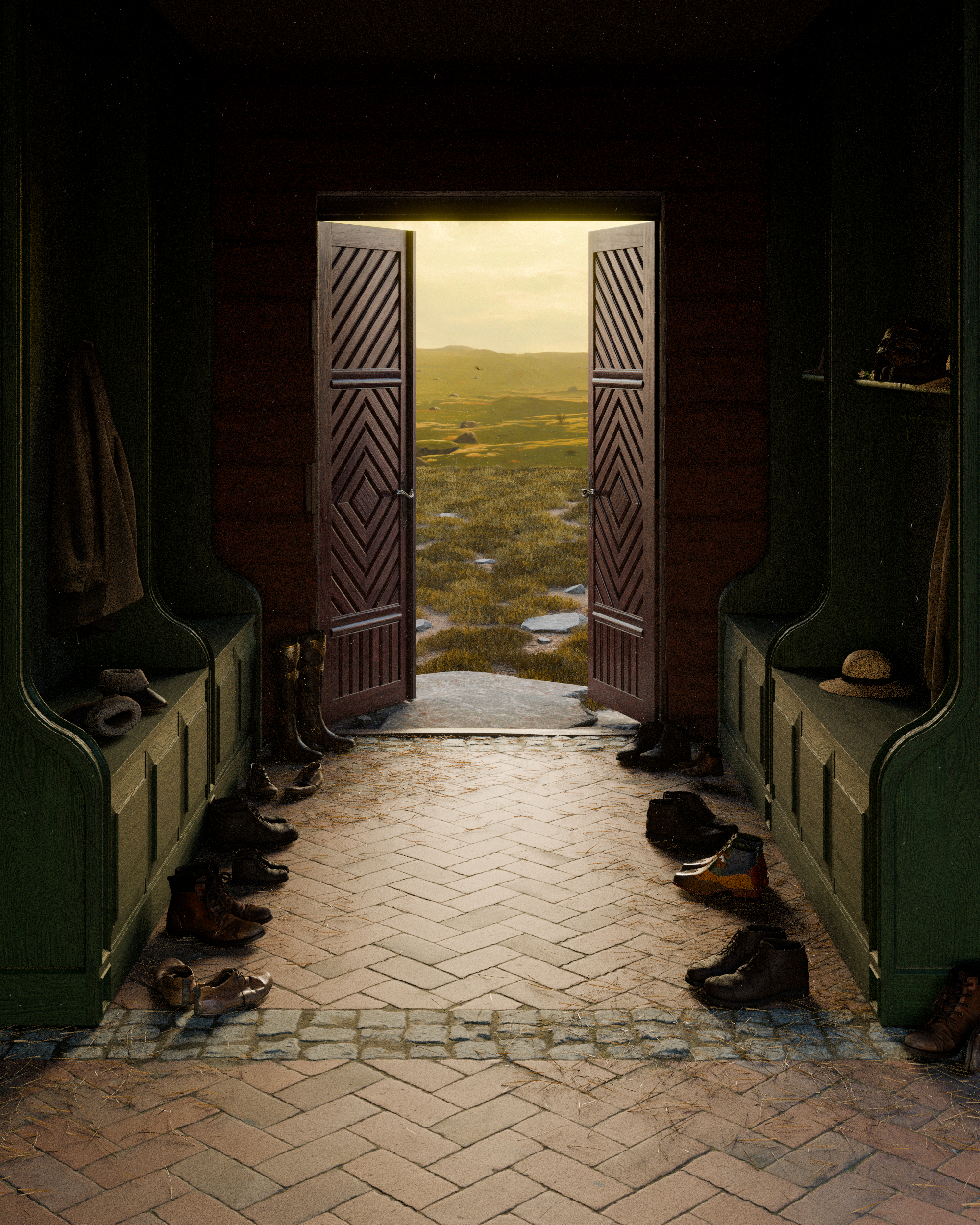
Housing Rohan is a speculative architectural project set one hundred years into the Fourth Age of Middle-earth. Rather than treating Tolkien’s world as a fixed medieval pastiche, the project asks what happens after myth becomes memory—when societies stabilise, traditions soften, and architecture begins to absorb peace rather than war. Using a Rohirrim longhouse as its central artefact, the project explores collective living, craft, and continuity through a design language that merges vernacular timber traditions with subtle transformations of formerly defensive forms. The result is an architecture that is recognisably Rohan, yet no longer bound to the urgency of survival.
The project is both a design investigation and a critique of contemporary architectural nostalgia. Instead of reviving historical styles wholesale, it treats fantasy as a testing ground for alternative social arrangements—communal over individual, crafted over industrial, symbolic over efficient. Influenced by William Morris, Pier Vittorio Aureli, and pre-industrial building cultures, the work proposes a world where luxury emerges from shared restraint rather than private excess. By situating this inquiry within a fictional future, the project sidesteps the false choice between modernism and historicism and instead uses myth as a tool to think more clearly about how we might live together today.